Those who break the law, not those who observe it, will benefit from reduced penalties and changes that could allow people who have lost their hunting or trapping licence to regain it.
BirdLife Malta is calling on the Government not to proceed with proposals that would weaken penalties under the Conservation of Wild Birds Regulations. It insists that, at a time when protected birds continue to be frequently targets of illegal hunting, the priority should be stronger enforcement and effective protection of wild birds.
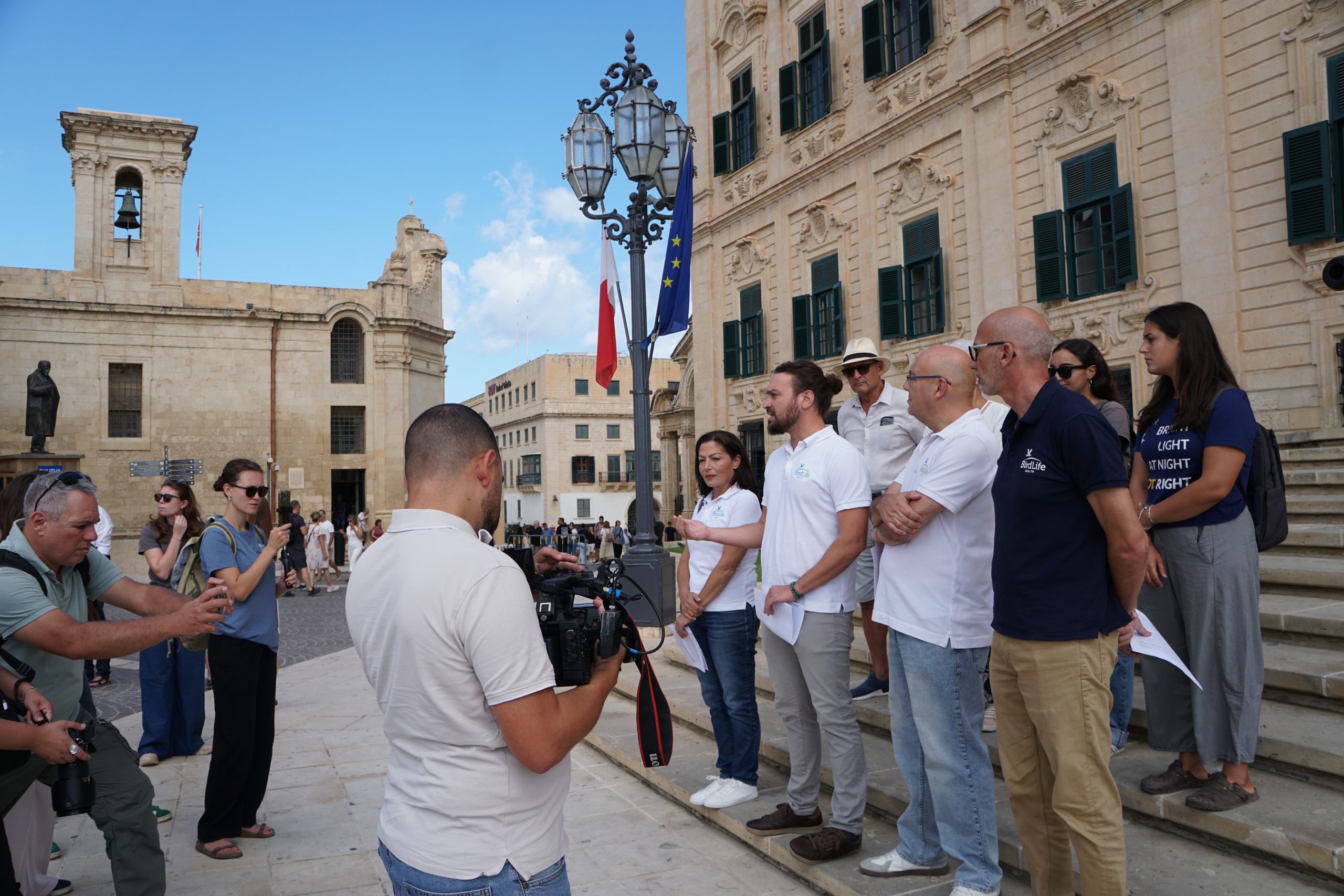
During a press conference, BirdLife Malta outlined its concerns about discussions on changes to penalties and the consequences linked to breaches of the Regulations, including in relation to people who have lost their hunting or trapping licence.
The illegalities we are witnessing today show that this is not the time to reduce penalties
Nicholas Barbara, BirdLife Malta’s Head of Conservation, gave an overview of the situation BirdLife Malta has witnessed in recent days regarding illegal hunting and protected birds being shot.
He also explained how the issue of penalties was brought before the ORNIS Committee, including the work commissioned from lawyers Arthur Azzopardi and David Chetcuti Dimech. During yesterday’s meeting, the latter presented a number of proposed changes to the penalties. BirdLife Malta raised several objections during the meeting.
“One of the most outrageous proposals is to drastically reduce the penalties for anyone who kills a scheduled protected bird, such as the Black Stork that was killed just days ago! If the penalties we have today are not a sufficient deterrent, why should we reduce them? These proposals will only benefit those who break the law,” said Barbara.
Who will benefit from these changes?
BirdLife Malta President Darryl Grima said that one of the most fundamental points in this discussion is to identify who would actually benefit if penalties for breaking the law are reduced.
“Someone who obeys the law does not benefit from a lower fine for someone who breaks the law. A law-abiding hunter has nothing to fear from strong penalties against illegalities. Reducing the consequences for breaking the law will directly benefit those who break, or may break, the law,” said Grima.
Proportionality must be assessed against comparable laws
BirdLife Malta challenged the argument that the penalties are disproportionate when they are compared with traffic fines or other contraventions that are not comparable. Grima said that if the Government wants to conduct a serious assessment of proportionality, it should compare laws with similar objectives, including the Animal Welfare Act.
Under this Act, a first conviction can result in a fine of between €2,000 and €65,000 and/or up to three years’ imprisonment, while a subsequent conviction can result in a fine of between €6,000 and €80,000 and/or up to three years’ imprisonment. Many of the fines under the Conservation of Wild Birds Regulations are considerably lower.
“We cannot call a penalty disproportionate by comparing it with a traffic fine while ignoring another Maltese law that protects animals from harm by humans and provides for much higher penalties,” said Grima.
“If the law considers strong penalties justified when a person mistreats an animal, why should we have a fundamentally different standard when a person illegally shoots a protected bird? Someone who kills a protected bird does so intentionally, not by accident. And if proportionality is being used today as an argument to reduce these penalties, tomorrow it could be argued that even the penalties under the Animal Welfare Act are too high,” Grima continued.
The law exists to protect birds
BirdLife Malta Chief Executive Officer Mark Sultana insisted that the discussion must begin with the fundamental purpose of the law itself.
“The name of the law is clear: the Conservation of Wild Birds Regulations. The fundamental purpose of this legislation is the conservation and protection of wild birds. Hunting is a regulated activity within this conservation framework; the law does not primarily exist to facilitate hunting,” said Sultana.
BirdLife Malta said that over the years, several amendments, derogations and concessions have been introduced. When considered together, there is a risk that these are not simply changing individual rules, but the character and spirit of the law itself.
“If we continue removing or weakening one layer of protection after another provided by this law, we have to ask: where do we draw the line?” said Sultana.
A hunting licence is not an absolute right
BirdLife Malta expressed concern about proposals relating to people who have lost their licence following breaches of the law.
“The Government should explain why it now wants to facilitate the return of these privileges. What has changed from a conservation perspective? What evidence shows that such a change is necessary?” asked Sultana.
BirdLife Malta also made it clear that its position is not directed against hunters who observe the law.
“A hunter who respects the seasons, permitted species, zones and licence conditions is not the target of these penalties. Penalties against illegal hunting are not penalties against legal hunting. We must distinguish between those who respect the law and those who deliberately break it,” said Sultana.
We have a problem of protected birds still being shot
BirdLife Malta stressed that penalties do not exist only to punish, but also to act as a deterrent.
“The fact that we are still recovering protected birds injured by shotgun pellets shows that we do not have an excessive deterrent. We have a problem of protected birds that are still being shot,” said Sultana.
He maintained that the discussion should focus on how enforcement and respect for the law can be strengthened, rather than on how the consequences for those who break the law can be weakened.
A clear message to Government: do not weaken the protection of wild birds
BirdLife Malta is calling on the Government not to proceed with reductions in penalties that would weaken the deterrent, and not to introduce measures that would allow people who have lost their hunting or trapping privilege because of serious breaches of the law to regain that privilege without convincing, transparent and conservation-compatible justification.
On behalf of BirdLife Malta, Head of Public Engagement Antonia Micallef and President Darryl Grima said that if the Government believes that certain penalties are disproportionate, it should publish the evidence on which this conclusion is based.
BirdLife Malta is also calling for a transparent assessment of proportionality that compares the Regulations with laws that are genuinely comparable, including the Animal Welfare Act, rather than with offences that are fundamentally different in nature and purpose.
“If the penalties we have today are still not enough to stop the illegal killing of protected birds, the answer cannot be to reduce those penalties. The answer should be greater respect for the law, stronger enforcement and greater protection for wild birds,” said BirdLife Malta.
“Who will benefit from these changes? Those who obey the law, or those who break it?”
BirdLife Malta is therefore calling on the Government not to introduce changes that would weaken the protection of wild birds, and to ensure that any changes to the law are guided by conservation, effective enforcement and respect for the rule of law.
Read our press release in Maltese.