
BirdLife Malta strongly condemns the Government’s decision, announced through the Wild Birds Regulation Unit (WBRU), to reopen applications for new General Trapping Licences.
This move represents a deliberate step backwards from Malta’s binding commitments upon joining the European Union. Finch trapping was to be phased out following accession in 2004, with no new licences issued and the practice restricted solely to initiate a breeding programme during a transitional period. Instead of allowing trapping to decline naturally, the government has chosen to actively regenerate it.
The Government is now injecting a new generation of trappers into an activity that the European Court of Justice has twice found to be in breach of EU law, irrespective of how much the Government tries to greenwash it as a scientific activity.
In 2018, the Court ruled Malta’s “recreational” finch trapping derogation illegal. In September 2024, it ruled once again against Malta, rejecting the so-called “scientific research” framework that replaced it. Despite repeated legal defeats and clear warnings from the European Commission, the government continues to tweak and repackage trapping schemes in an attempt to circumvent the EU Birds Directive. Reopening new licences now risks placing Malta in continued breach of EU law and signals that Malta has no intention of honouring either the spirit or the letter of its EU obligations.
More trapping sites, more land take-up, more habitat damage
BirdLife Malta is today publishing a map of active trapping sites recorded in 2025. The scale is already alarming. Large swathes of the Maltese countryside are carved up into trapping plots, many of them located within Natura 2000 sites designated to protect biodiversity.
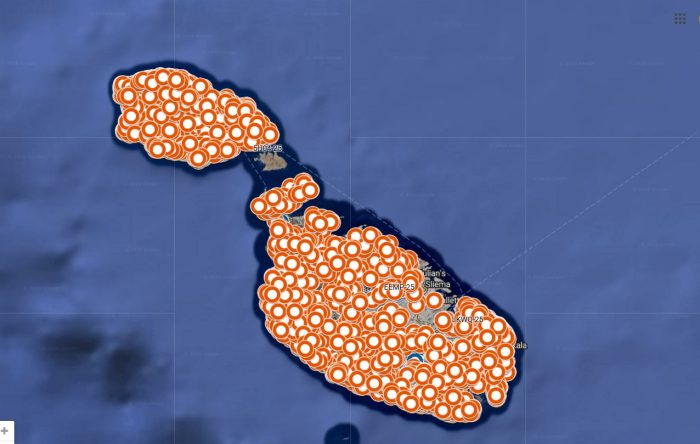
Issuing new licences will inevitably result in even more trapping effort across an already heavily impacted countryside. The numbers were already ecologically unsustainable. Increasing them further will intensify habitat destruction, expand the physical takeover of rural land, and deprive the public of its right to enjoy wild birds in the countryside.
The Government appears intent on allowing further occupation of what remains of Malta’s natural landscape by private trapping interests, at the expense of the wider community and protected habitats.
A reckless decision taken in an enforcement vacuum
This decision comes at a time when environmental enforcement is in shambles. The Environmental Protection Unit (EPU) lacks the resources necessary to properly monitor and control any trapping derogation in Malta, while Gozo has effectively been left without adequate environmental police presence. The political decision to weaken laws, create smokescreens and loopholes, and effectively reduce enforcement is leading to massive abuse of environmental resources across the board.
By expanding the number of licensed trappers while enforcement capacity remains critically weak, the government is creating the conditions for further lawlessness. Trappers will increasingly outnumber enforcement officers in the field.
Illegalities are already evident. Finch trapping has been reported during the closed spring season, while the persistent demand for live bird decoys continues to fuel illegal trapping abroad, including cross-border impacts in neighbouring countries. Instead of addressing these abuses, the government is choosing to widen the system that enables them.
A short-sighted, pre-election political manoeuvre
BirdLife Malta notes that this decision was taken unilaterally, without meaningful consultation at ORNIS Committee level or with other environmental authorities entrusted with safeguarding Malta’s natural heritage.
The timing and nature of the announcement point to a desperate pre-election attempt to secure trapper support, regardless of the legal, ecological and reputational consequences for Malta. It is a political calculation that places narrow electoral interests above national and European obligations.
Malta lies on one of the most important migratory routes between Europe and Africa. The birds targeted locally are part of a shared natural heritage that belongs to all Europeans. Decisions taken here have continent-wide consequences.
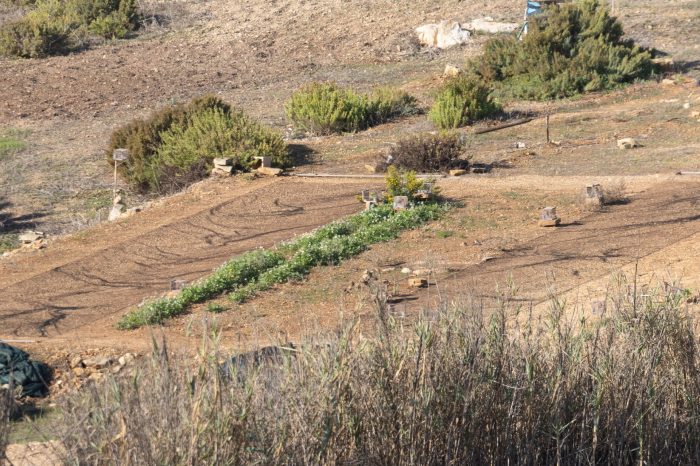
Reopening new trapping licences reverses what should have been a steady, irreversible phase-out. It undermines Malta’s credibility, weakens the rule of law, and further entrenches conflict with EU institutions.
BirdLife Malta calls on the Government to immediately withdraw this decision, respect its binding commitments, and redirect national policy towards:
- Full compliance with EU environmental law;
- Adequate resourcing of environmental enforcement;
- Protection and restoration of habitats;
- Genuine, peer-reviewed scientific research that does not rely on large-scale capture of protected wild birds.
“Malta’s countryside and nature are not a bargaining chip in an election campaign. They are a shared public good and a European responsibility. Tens of thousands of Maltese feel distant from both main political parties, mainly because of the way our natural environment is treated. These decisions allowing a few to take what belongs to everyone, be it land or biodiversity or natural resources, are why thousands of people are holding back from choosing our future leaders,” said BirdLife Malta CEO Mark Sultana.
Read our press release in Maltese.